
How to Talk to Film Composers and What Filmmakers Should Know
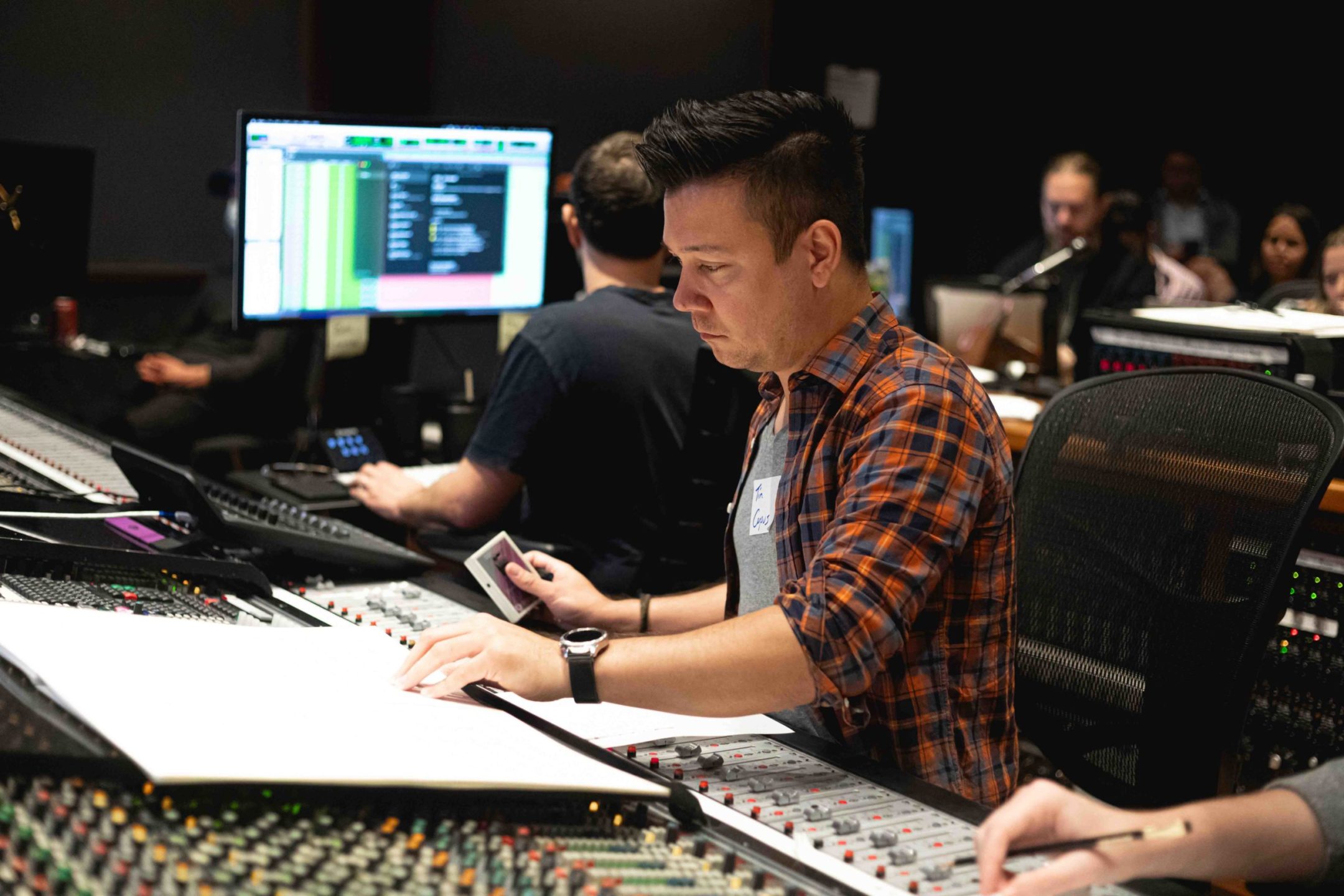
How Do You to Talk to Film Composers?
This is often a question I see asked at conferences and something we talk about often in the Chicago Chapter Society of Composers & Lyricists events. Do filmmakers need to study music? Filmmakers and composers both wonder the question.

Collaboration between a director and composer can be one of the most powerful creative relationships in filmmaking. The score doesn’t need to simply “accompany” the picture, it can be a useful tool in commanding how the audience feels, thinks, and remembers the story. Just imagine Star Wars without the music. Insane right?
Yet I see many filmmakers feel unsure about how to communicate with composers. Do they need to know music theory? Should they use technical musical language? How specific should they be?
Here’s how to have a productive, creative, and efficient conversation with your composer without needing a conservatory degree.
Should A Film Director Learn Music Theory?
I spoke with a director recently and they mentioned that they were thinking about spending time/money to take a music theory course online. You do not need to understand music theory to work well with a composer. In fact, I don’t recommend it at all.
What is Music Theory?
Music theory is the study of how music is structured, including melody, harmony, rhythm, and form. It provides a shared language and set of principles that help people analyze, understand, create, and communicate about music. Music theory and how music production works is what musicians know for their work, not directors.
You don’t need to know:
- What a diminished chord is
- How to read sheet music
- What “mixolydian mode” means
- The difference between 6/8 and 3/4
That’s what the composer is for! This is their language for a reason. Just like how a gaffer or a DP has deep knowledge of their department. It’s not the director’s job to learn how music works at a micro level.
What you do need is something far more valuable: clarity about emotion, story, and intent.
A composer’s job is to translate your emotional goals into musical language. Your job is to articulate those goals as clearly as possible. I see so many directors not know what they want or want something so incredibly specific that it is copyright infringement.
You as a director are better off spending time reading the dictionary and thinking about your story. Learn ways to articulate the story. Oftentimes people think that in music minor=sad, major=happy. That’s…that’s just so wrong. Whoever says that clearly does not know anything about music.
Talk About Story First, Not Sound
The most useful conversations begin with narrative, not instrumentation. How do you need subtext in the scene?
- Did the actors do such a phenomenal job that music needs to stay small?
- Do you need music to set the vibe of a bar?
- Is it a chase scene with fast edits requiring some infused energy?
Think about what the goal of the music is.
Instead of saying:
“I want a sad piano cue in D minor.”
Try:
“In this scene, the character looks calm on the surface, but inside they’re terrified. I want the audience to feel that tension.”
Instead of:
“Make it more cinematic.”
Try:
“I want this moment to feel like the turning point of the film—the audience should realize nothing will ever be the same.”
If you can describe what the audience should feel, your composer can handle the musical decisions.
Talk to your composers like how you would talk to your actors. That’s basically what the music is, it’s an invisible actor in the scene, so think about how it can add flavor to the story and don’t leave it as an add on in post. The BEST directors have an idea for what the scene will sound like, whether it’s energetic or calm, or if the music is foretelling something that will be in the 3rd act.
Talk to you composers like how you would talk to your actors.
Use Reference Tracks—But Use Them Wisely
Temp music and references can be extremely helpful, but only if used as a starting point, not a straitjacket. Composers hate it when a director/producer gets “temp love” – when the director is so in love with the temp track that they can’t imagine anything else. This is why so many movies sound the same and so many stories are stifled by conservative storytelling. If you want your film to stand out, let your artists be artistic and don’t just copy what you’ve seen before.
Good ways to use reference tracks:
Supply a track or video with music to your composer with specific details
- “I like the emotional tone of this cue”, or “I like how it builds from small strings to build the tension by 1:43”
- Be specific about WHERE in the temp you like the music.
- “I like the speed of this track for editing. This is the tempo we need for the cuts.”
- “This is the kind of energy I’m imagining, but not necessarily the same instruments.”
A director once played a clip of another movie for me and said “I like how this music sounds like a scary alarm, that’s the feeling I want!”
Less helpful:
- “Make it sound exactly like this.”
- “Just recreate this score.”
Side-note: I had a director tell me they used AI to write music and it was only ok, so they wanted to know if I would “spice it up for free” since the AI already did the hard part. I turned that job down. 😂
Think about the sound world
- Working with the composer, you can brainstorm, is the sound world of the story rock band, classical, electronic, etc. You don’t need to name specific instruments – that’s the composers job. But you can talk about reference soundtracks for style that you see fitting with the project.
- Understand that music doesn’t just appear. Good music often takes time, so don’t leave this conversation as an afterthought. Discuss with your composer early on what sound you want…and whether you can afford it. You may not be able to afford a big orchestra, so let the composer brainstorm how to achieve the scope and scale of what you’re dreaming of, all within your budget.
Celebrate Creativity
Your composer is not a mimic—they’re a creative partner. References should guide, not dictate.
Music is often an under used tool by young composers to make their projects stand out. If you try to make something that is similar to everything else out there, you’re likely to get lost in the ether. There are ways to be similar in sound to your favorite projects while still being original. If you want your project to be the best it can, leave space for creativity.
Be Specific About Tone, Not Technique
Instead of talking about musical structure, talk about feeling:
Helpful language includes:
- “exciting vs. calm”
- “Intimate vs. epic”
- “Fragile vs. powerful”
- “Still vs. restless”
- “Hopeful vs. wandering”
You can also describe how music should interact with the image:
- “I want the music to stay in the background here.”
- “I want the score to feel like another character.”
- “I want silence to do the heavy lifting in this moment.”
These are incredibly valuable directions for a composer.
Don’t say, “I want it to feel more orange!” What the hell does that mean?
Remember that every creative you work with comes to the table with their own background and understanding of language. Bittersweet will mean something different to each person, depending on their life experience. So think about how you can use specific words to help explain your story. Adjectives are very useful. There is a difference between jubilant and happy. Language matters!
Be Honest About What You Don’t Know
Great directors don’t pretend to be experts in every field. If you’re unsure how to articulate something, you can simply say:
“I don’t have the right musical words for this, but here’s what I’m feeling…” or “This scene is missing something, right now it feels like X, but I want it to feel like Y.”
That is often more useful than forcing technical language you don’t fully understand. Or maybe it’s best for you to watch the scene together or watch a different scene from a different project together and talk about how it makes you feel. That is SO much more helpful than just another temp track.
A good composer will help translate your intuition into musical decisions.
Trust Your Composer’s Expertise
You hired a composer because they understand:
- Musical storytelling
- Emotional pacing
- How music shapes perception
- How sound interacts with picture
- How to actually write music – it’s not that simple and especially if it’s a large project, there are a lot of T’s to cross and I’s to dot.
Once you’ve clearly expressed your story goals, give them room to create.
If you micromanage every note, you lose the very thing a composer brings to the table: creative interpretation. This is why you want to bring your composer on early and not leave it for 1 week before your Sundance deadline.
Another big thing is to not be upset if the music isn’t exactly what you want. If your composers sends you music that you think isn’t right, perhaps they’re not the right person for the job OR maybe you’re both watching the same scene and feeling different things. Film music is usually an iterative process and that’s ok. The old saying that I always like to say…”it’s a process not an event.”
So… Should Filmmakers Learn Music Theory?
Short answer: No, not unless you want to.
What filmmakers should learn is:
- How to talk about emotion
- How to articulate storytelling goals
- How music functions dramatically in film
- How to communicate clearly and collaboratively
That will serve you far better than knowing what a dominant seventh chord is or what the best synthesizer for the project is.
The Best Director–Composer Relationship
The most successful collaborations usually work like this:
- Director: “Here’s what the scene means.”
- Composer: “Here’s how that sounds.”
- Director: “Yes, that feels right.” or “This feels close, but could we push it more in this direction?”
That back-and-forth is where great film scores are born. It’s a closer partnership which is why you see composer and director pairings so often, like Spielberg & Williams, Abrams & Giacchino, Cameron & Horner.
If you need help plotting out how to work with your composer or help finding a composer, feel free to reach out. I’m always happy to talk more about this subject.